Here’s Everything Director Susanne Bier Told Us About Art’s Prominent Role in the Twisted HBO Drama ‘The Undoing’

She described filming at the Frick Collection as “incredibly joyous.”
This fall, HBO blessed art-history nerds and luxurious coat lovers alike with a gift for the eyes: Nicole Kidman playing a tortured and extraordinarily well-dressed mom on one of the most art-filled TV sets of the year.
The Undoing follows the story of Grace Fraser (Kidman), her husband, Jonathan (Hugh Grant), and her father, Franklin (Donald Sutherland), as they navigate the fallout from a violent murder in their Upper East Side private school community. While the big question at the heart of the whodunit was answered in the miniseries’s finale on Sunday, some viewers (also known as us) were left hungry for more information—about the art that decks the walls of the New York apartments shown on screen.
Enter Susanne Bier, who served as director and executive producer for the show. Besides being an Emmy, Golden Globe, and Academy Award winner, she also has a background in set design and architecture. The aesthetic of The Undoing was shaped in large part by her creative vision. “I love all the artists who are sort of touching upon the madness of being a human being,” she tells Artnet News.
Read on for Bier’s take on all the art in the show, from filming at the Frick Collection to that portrait of Kidman.
The art was specifically designed to offer a window into the characters.
In the very first episode, Grace, Jonathan, and Franklin attend a school fundraiser at the home of the ultra-wealthy Spencers, who supposedly have two much talked-about works by David Hockney in their dining room. While viewers never actually see the Hockneys (some works are just too difficult to license), the apartment is filled with a lot of other bright, expensive-looking contemporary art. The Spencers’ grand collection, Bier says, is meant to contrast with the artwork later shown in Franklin’s apartment, which includes less showy (but still, of course, very expensive) Impressionist and Modern art.
“Obviously, it does sort of signal wealth, but I also felt that there was a huge difference,” Bier says of the two collections. “I mean, I love Hockney, but I do think that Franklin’s collection was kind of more personally curated. The home of the Spencers is super expensive, but also might be organized by interior decorators, while you felt that Franklin had probably bought his art himself.”
The art was meant to be identifiable, but not obvious.
In order to create the sense that Franklin had assembled his collection personally over a long period of time, Bier’s team sought out works by famous artists that were uncharacteristic or little-known.
Franklin’s collection includes reproductions of Willem de Kooning’s Door to the River (1960), Diego Rivera’s Zapatista Landscape (1915), Henri Rousseau’s The Repast of the Lion (ca. 1907), and Juan Gris’s The Open Window (1921). This approach also had the added bonus of keeping realism intact, since most of the selected works were not particularly identifiable parts of major museum collections. “We’d never get away with pretending we have Guernica,” Bier notes.
Franklin’s love of the Frick Collection is part of the big picture.
Some of the show’s most haunting scenes were filmed at the Frick Collection on the Upper East Side. Although they were not originally written with the Frick in mind, Bier realized that placing Franklin there added a layer of depth to his character and showed that he had a real love for art. Using a limited amount of equipment and a small crew on a day when the museum was closed, Bier described filming there as “incredibly joyous.”
At the Frick, Franklin sits in front of two different works by J.M.W. Turner: Harbor of Dieppe: Changement de Domicile (1826) and Cologne, the Arrival of a Packet-Boat: Evening (1826). “I like one more than the other, so he sits more in front of the one,” Bier said with a laugh. Another work by Turner, The Burning of the Houses of Lords and Commons, 16 October 1834 (1835), hangs in Franklin’s living room.
“I felt that Turner was right for him, because it’s magical, but it’s not about people, it’s about atmosphere,” Bier says. “They are the kind of paintings that you can keep looking at.” Plus, she adds, “it’s the closest to a landscape you get in a big city, so that was also part of it.”
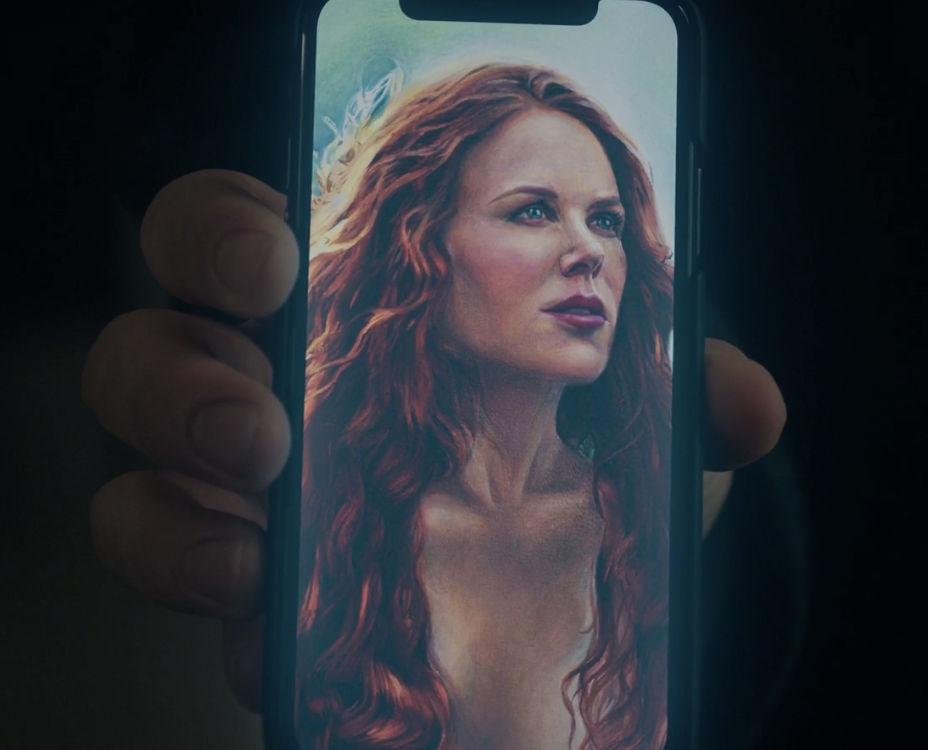
Artist Lily Morris’s portrait of Nicole Kidman as Grace Fraser, as seen on the show.
Elena’s portrait of Grace was done by a real artist.
In the fourth episode, detectives tell Grace that the murder victim Elena Alves (Matilda De Angelis), a fellow mom at the school Grace’s son attends who is also a practicing artist, made an extremely detailed painting of Grace before she was killed.
“I think it probably was something [series writer] David [E. Kelley] invented,” Bier says of the idea to include the portrait in the script. Although the portrait is shown to the audience only in an iPhone photo, it turns out the real painting was made by artist Lily Morris, whose work was also featured in Bier’s last project, Netflix’s Bird Box (2018). (Morris created the paintings that filled the studio of the film’s protagonist, played by Sandra Bullock.)
For her part, Morris recounts that Bier called her out of the blue one day and asked her to make a portrait of Nicole Kidman “immediately.” She enthusiastically obliged. In subsequent conversations, the pair discussed how to depict someone “who was the object of someone’s obsession.”
“It just so happens that Nicole Kidman naturally embodies so many of the exaggeratedly majestic qualities obsession tends to generate,” Morris says.
It’s no wonder Bier so cannily incorporates art into her productions. Morris says the director shares with visual artists a common interest in capturing the human psyche.
“Susanne is the ultimate observer of human nature,” Morris notes. “She glides into every situation, observes, inhales the nuances of human behavior, and then translates them to the screen.”
Follow artnet News on Facebook:
Want to stay ahead of the art world? Subscribe to our newsletter to get the breaking news, eye-opening interviews, and incisive critical takes that drive the conversation forward.
Art World
A Retired Nurse Loved Visiting This German Museum So Much That She Bequeathed Her Home to It—Much to the Institution’s Surprise
The Folkwang Museum in Essen had no idea Jutta Franke's donation was coming.
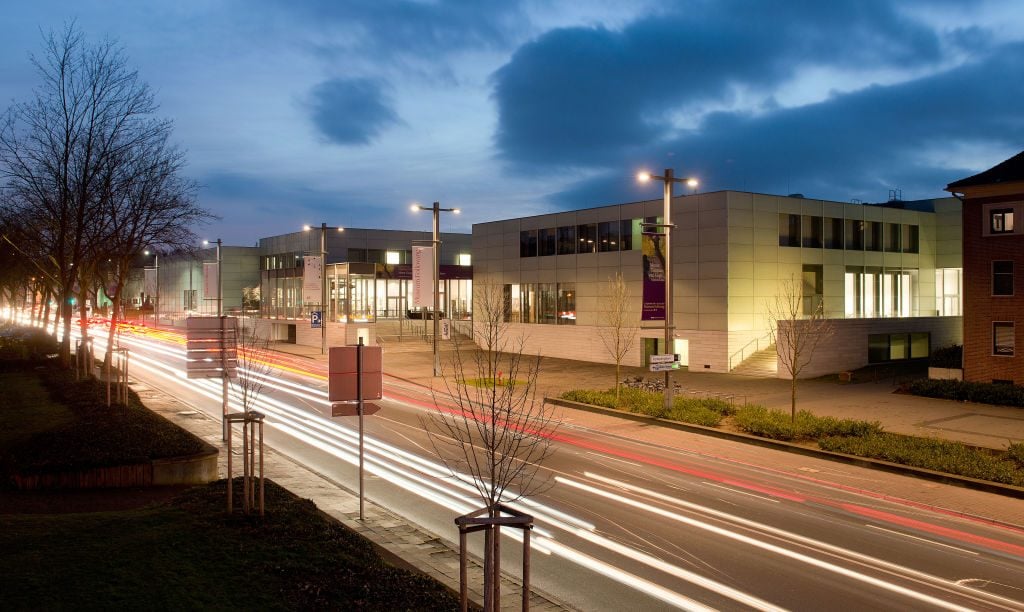
A retired German nurse came up with an unusual way to make a gift to a museum she loved.
Before she died, at age 82, Jutta Franke drew up papers to bequeath her house to the Folkwang Museum, in Essen, Germany, reports Monopol. She asked that it be auctioned off, with the proceeds going to the institution. The museum had no idea that the gift of the house, which sits on about 700 square yards of property, was coming.
In fact, the museum wasn’t even familiar with Franke. “We would have liked to get to know the lady during her lifetime and thank her for her extraordinary generosity,” Ulrich Blank, the director of the Folkwang Museum Association, told Monopol.
The house is worth “a few hundred thousand euros,” according to the German news network WDR. The museum will use the funds to buy an artwork, which will be permanently associated with Franke’s name.
It’s no wonder that the museum, stocked with works by artists including Picasso, Matisse, Delacroix, Courbet, Manet, Renoir, Cézanne, van Gogh, Dalí, Munch, and many more, as well as an ethnological and craft collection from around the globe, provided a place of delight for Franke, who, the sleuths at Monopol found out from her neighbors and acquaintances, was an avid traveler who also whiled away many a Sunday at the Folkwang.
The house, in the Frillendorf district, is now in the hands of a real-estate agent.
News from the museum hasn’t always been so heartwarming. In 2014, it caused an outcry when it canceled an exhibition of Balthus’s Polaroid photographs after an article in Die Zeit accused the artist of pedophilia. The museum feared “unwanted legal consequences” due to the presence of an eight-year-old girl in the suggestive photographs, Artnet News reported.
Follow artnet News on Facebook:
Want to stay ahead of the art world? Subscribe to our newsletter to get the breaking news, eye-opening interviews, and incisive critical takes that drive the conversation forward.
Art World
Art Industry News: French Politicians Want to Rename the Musée D’Orsay to Honor a Former President Who Died This Week + Other Stories
Plus, the Smithsonian's National Museum of the American Latino takes a big step forward and Lithuania names its Venice Biennale pick.
Art Industry News is a daily digest of the most consequential developments coming out of the art world and art market. Here’s what you need to know on this Friday, December 4.
NEED-TO-READ
Senate Rules Committee Moves Forward on Smithsonian Latino Museum – The public body has unanimously voted to approve the National Museum of the American Latino Act, a bill that would establish the museum on the National Mall. The next step is to bring the legislation to the full Senate for a final vote and then send it to the president’s desk. A museum celebrating the contributions of Latinos throughout US history is long overdue: the Smithsonian acknowledged back in 1994 that such collections are the most underrepresented across all of its museums. (Press release)
Lithuania Names Its Venice Biennale Pick – Robertas Narkus has been chosen to represent the European nation at the Venice Biennale in 2022. For his presentation, the multidisciplinary artist will create a functioning cooperative in one of the last remaining non-gentrified districts of Venice in collaboration with artists, scientists, local Venetian residents, and small businesses. Gut Feeling will be curated by Neringa Bumblienė and commissioned by the Contemporary Art Centre (CAC) in Vilnius. (Press release)
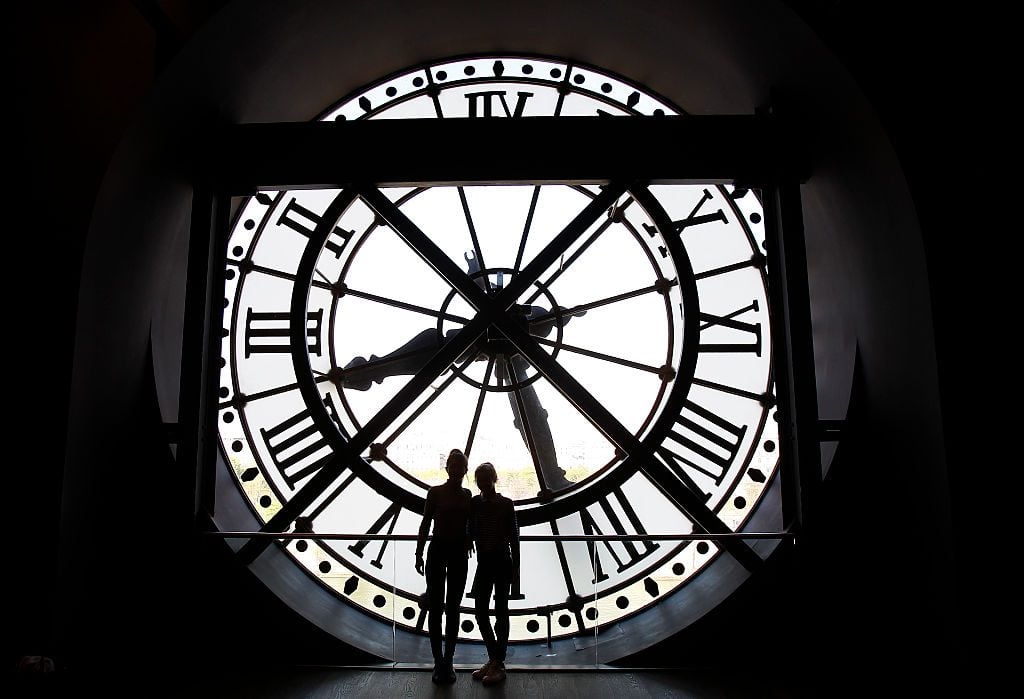
French Politicians Want to Rename the Musée D’Orsay – French politicians are vying for the Musée d’Orsay to change its name to honor the late former French president Valéry Giscard d’Estaing, who died earlier this week at age 94 after contracting COVID-19. The former president paved the way for the creation of the institution as well as the Cité des Sciences, and also granted Paris the power to elect its own mayor. (Le Parisien)
Tracey Emin and Edvard Munch Are an Art Pairing for the Ages – A long-awaited exhibition at London’s Royal Academy pairs the Norwegian Expressionist painter Edvard Munch with the provocative YBA Tracey Emin. Emin has been deeply influenced by Munch, and the pair share an incredibly high tolerance for pain. The New York Times writes that Emin’s unflinching expressions of anguish hit differently in light of her recent revelations about her battle with cancer: “Her work has always grappled with the vulnerability of life, but now the specter of mortality hangs low, and the poignancy of these pictures feels more acute.” (New York Times)
ART MARKET
Online Shift May Be Built to Last – The latest Hiscox Online Art Trade Report found that many of the gains made by digital platforms during lockdown are likely to remain in place when the social-distancing era is over. Fifty-six percent of collectors surveyed consider the market’s shift to digital permanent—although only 15 percent said they preferred the online experience to in-person encounters. (Barron’s)
Guitars Used by Music Greats Sell Big at Auction – The “Icons & Idols Trilogy: Rock ‘n’ Roll” sale hosted by Julien’s Auctions brought in more than $400,000 for a trio of guitars played by Eddie Van Halen, the co-founder of his eponymous band who died in October at age 65. Other notable sales from the 900-lot auction included two Fender guitars Kurt Cobain smashed, which fetched $281,600, and Bob Marley’s guitar, the first ever to come to auction, which garnered $153,600. (Rolling Stone)
COMINGS & GOINGS
Carly Fiorina Named Chair of Colonial Williamsburg Board – The former CEO of Hewlett-Packard was elected to helm the Colonial Williamsburg Foundation’s board of trustees, which she has served on since 2017. Fiorina, who ran an unsuccessful presidential bid in 2016, will succeed Thurston R. Moore, who has held the position since 2018. (Press release)
Norton Museum of Art Appoints New Director – The Florida museum has named Ghislain d’Humières as its next director and CEO. Most recently, d’Humières served as director of the Speed Art Museum; before that, he worked as director of the Fred Jones Museum of Art at the University of Oklahoma. His first day at the Norton is January 18. (Press release)
FOR ART’S SAKE
A Phallus Sculpture Appears in the Bavarian Mountains – In other vanishing art news, a six-foot-tall wooden phallus-shaped statue erected on the Grünten mountain in Bavaria years ago mysteriously disappeared over the weekend. German police were dispatched to the site, which was dubbed a “cultural monument” on Google Maps, and found nothing but a pile of sawdust. Now, in a strange turn of events, a new, even larger statue of male nether-regions has cropped up in its place, with supporting wooden beams to boot. Monolith? We don’t know her. (Courthouse News
Emotional Art Class Date Sends Bachelorette Running From the Room in Tears – “Love is a lot like creating art. You have to really invest in yourself and be extremely open to the process,” an art instructor told Bachelorette Tayshia Adams and her suitors on this week’s group date. After some awkward figure drawing with nude models and blindfolded clay sculpting, the men were asked to create self-portraits that revealed something about their inner selves. The date culminated with Ben Smith’s dramatic decision to strip nude, telling Adams, “What you see is only a small part of who I am.” Deeply moved, Adams said “what an art day!” as she dashed outside to cry in private, before returning to tell the men how impressed she was by their vulnerability. Ah, the power of art! (ABC)
See the Courtyard of Palazzo Strozzi All Lit Up – A glowing beacon of hope by the Italian artist Marinella Senatore has been installed in the courtyard of the Palazzo Strozzi in Florence. The work is called We Rise By Lifting Others and is meant to emphasize the power of community in a time of social distancing. It will be accompanied by a program of workshops focused on social activation. (Press release)
Follow artnet News on Facebook:
Want to stay ahead of the art world? Subscribe to our newsletter to get the breaking news, eye-opening interviews, and incisive critical takes that drive the conversation forward.
Comments
Post a Comment